What to Do When a Storm Damages a Tree on Your Property
A tree coming down on your property during a storm is one of those situations where most homeowners have no idea what to do. It happens fast, it's often loud and frightening, and the aftermath involves a combination of safety risks, insurance questions, and logistical decisions that most people have never had to navigate. Knowing what to do in the first hours after storm tree damage can prevent additional injury, reduce property damage, and make the insurance and cleanup process significantly less stressful.
Trees Plus has responded to storm damage calls across Lake and Porter Counties for over a decade, and we've seen every variation of this situation. Here's the sequence of steps we recommend to any homeowner dealing with a downed tree after a NWI storm.
Step One: Stay Back and Check for Utilities
The first and most important thing to do after a tree comes down is nothing. Don't approach the tree until you've checked for downed utility lines. In Northwest Indiana, overhead power lines run along most residential streets and through many backyards, and a falling tree can bring them down or remain entangled in them. A downed power line doesn't always arc or spark. It may look completely inactive while still being energized and lethal.
If you see any wires down, or if the fallen tree is near utility lines and you're not certain whether contact has been made, call NIPSCO at 1-800-464-7726 before anyone approaches the tree. NIPSCO can dispatch a crew to de-energize the lines so that the area is safe. Do not attempt to move a tree that is in contact with power lines yourself, and do not let anyone else do so either. This is one of the most common ways people are seriously injured after storm tree damage.
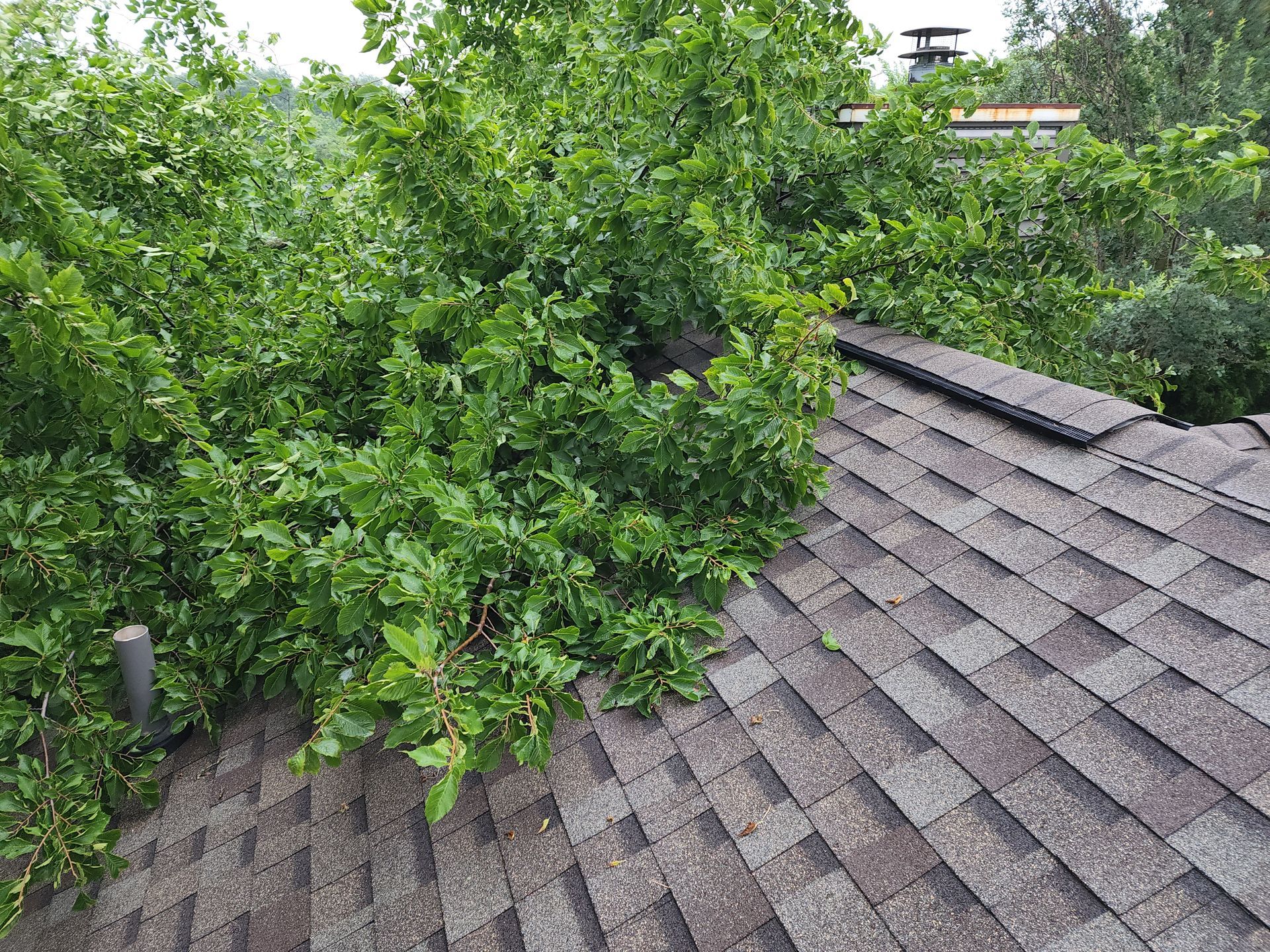
Once you've confirmed there are no utility hazards, check your home and any structures near the tree for visible damage, gas leaks, or structural compromise before entering. If the tree has come through the roof, don't go inside until you've had a structural assessment.
Step Two: Document Everything Before You Move Anything
Once the immediate safety picture is clear, take photos and video of everything before any cleanup begins. Walk the entire perimeter of the damage and document the fallen tree, all contact points with structures, any damage to fencing, outbuildings, vehicles, landscaping, and the ground itself. Include wide shots that show the full extent of the damage and close-up shots of specific impact points.
This documentation is critical for your insurance claim. Adjusters work from the documentation provided by the homeowner when they can't get to the property quickly, and gaps in documentation can complicate claims. Video is particularly useful because it shows the spatial relationship between the tree, the damage, and the surrounding property in a way that still photos can't fully capture. Take more than you think you'll need.
If there are multiple trees affected or if the damage extends to neighboring properties, document all of it. Liability questions between neighbors often come down to the condition of the tree before the storm and where the damage occurred, and thorough documentation helps everyone involved.
Step Three: Call Your Insurance Company
After documenting the damage, call your homeowner's insurance company to open a claim before any cleanup begins. Most homeowner's policies cover emergency tree removal when a tree has fallen on a covered structure, and many also cover a portion of removal costs for trees that have fallen in the yard without damaging structures. The specifics depend on your policy.
It's important to call before cleanup because insurance companies typically want to send an adjuster to assess the damage in person. If you have the tree removed and the debris cleared before the adjuster visit, you may have difficulty documenting the full scope of the damage and the associated costs. Your documentation from Step Two will support the claim, but the adjuster will still want to see as much as possible in its original state.
Ask your insurer specifically whether emergency tree removal is covered, what the deductible is for storm damage claims, and whether tree damage to your property from a neighbor's tree is covered under your policy or theirs. These questions are easier to ask before the claim is filed than during the process.
Step Four: Call a Licensed, Insured Tree Service Company
Once you've handled the immediate safety steps and started the insurance process, call a licensed, insured tree service company for emergency removal. This is not the time to hire an unlicensed person with a chainsaw offering to work cheap. A storm-damaged tree can be under significant tension, with the weight distribution completely unpredictable compared to a standing tree. Improper cuts on a loaded, tangled tree can cause it to spring, fall, or shift in unexpected directions with enough force to cause serious injury.
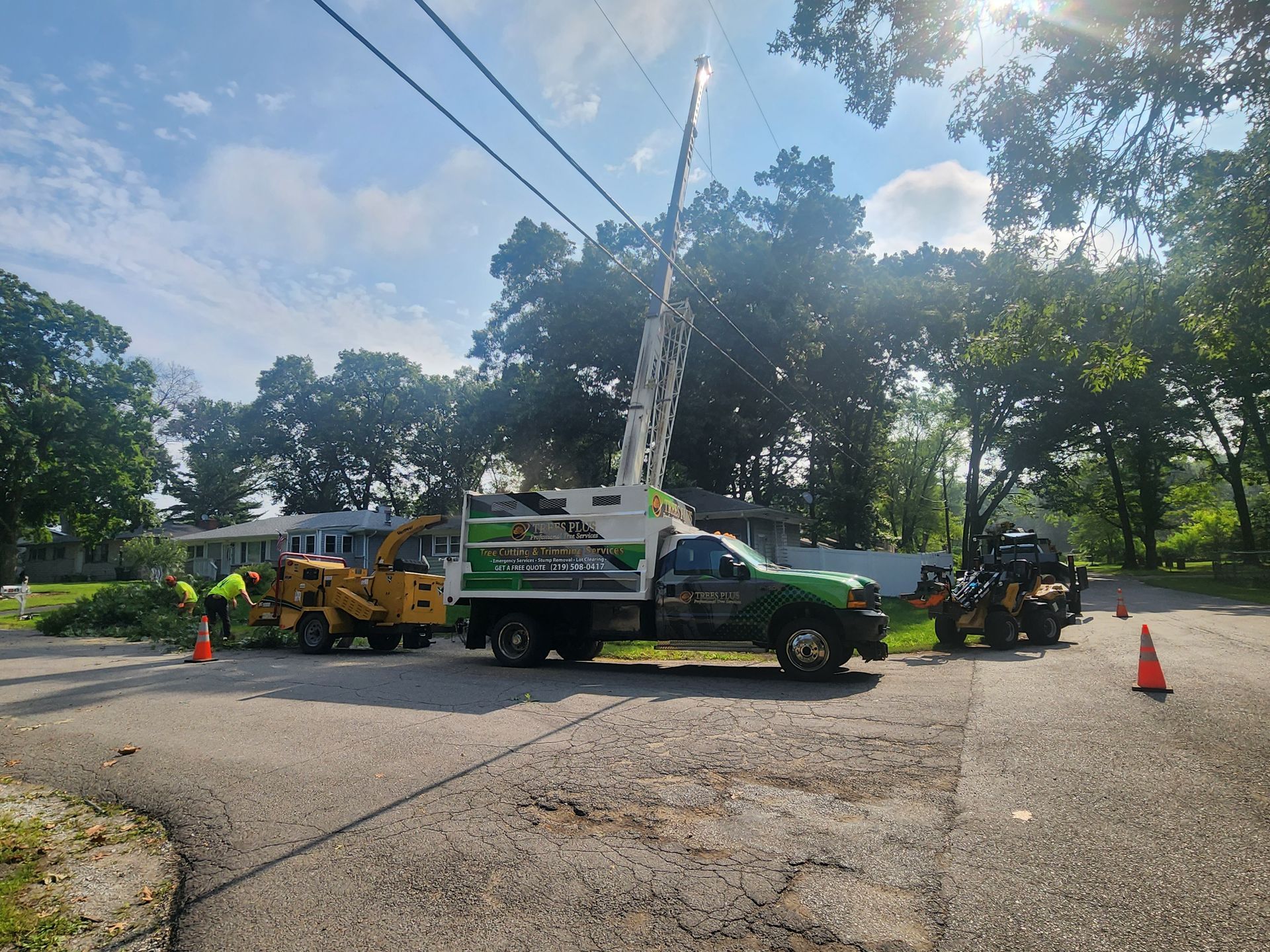
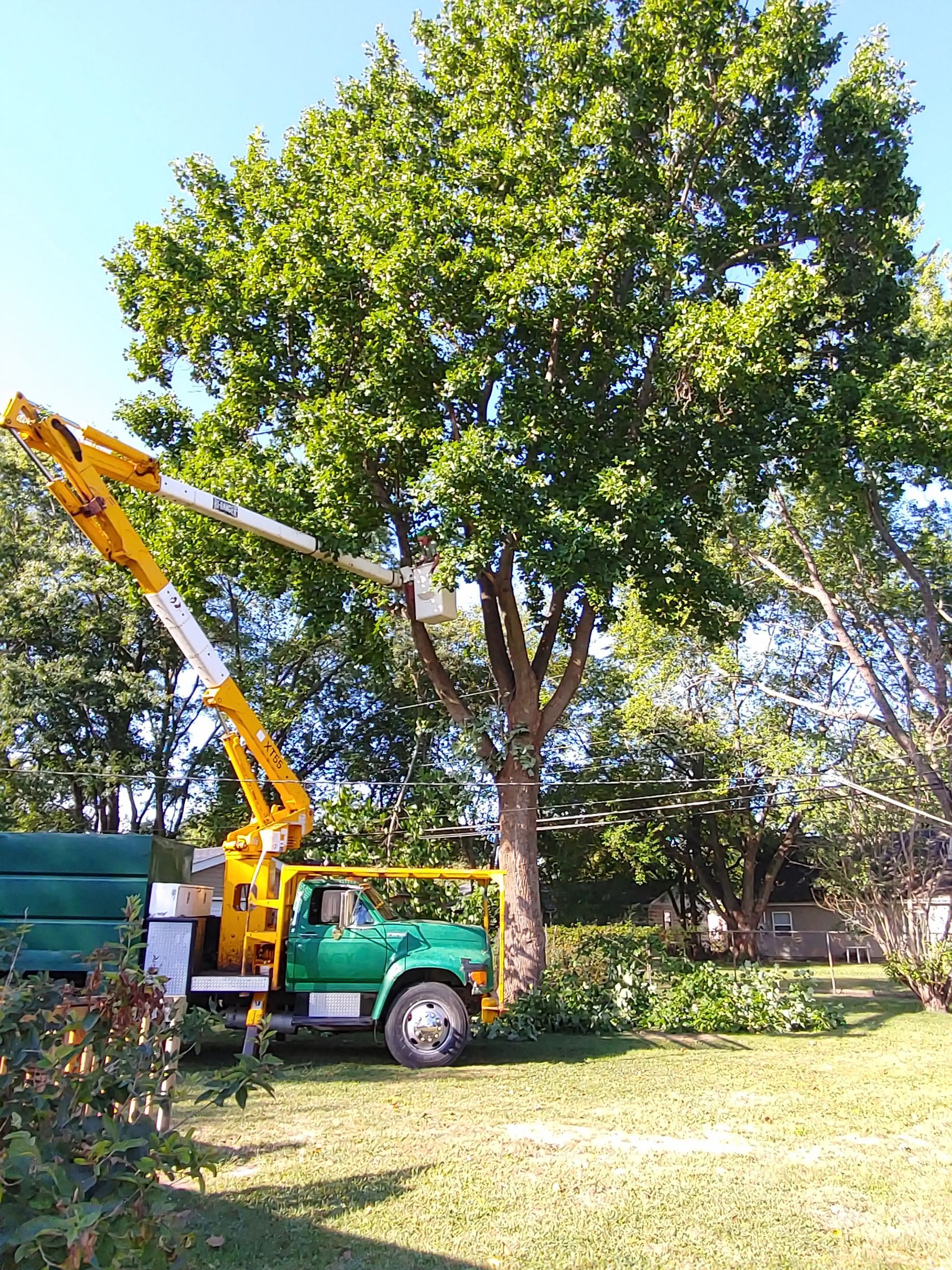
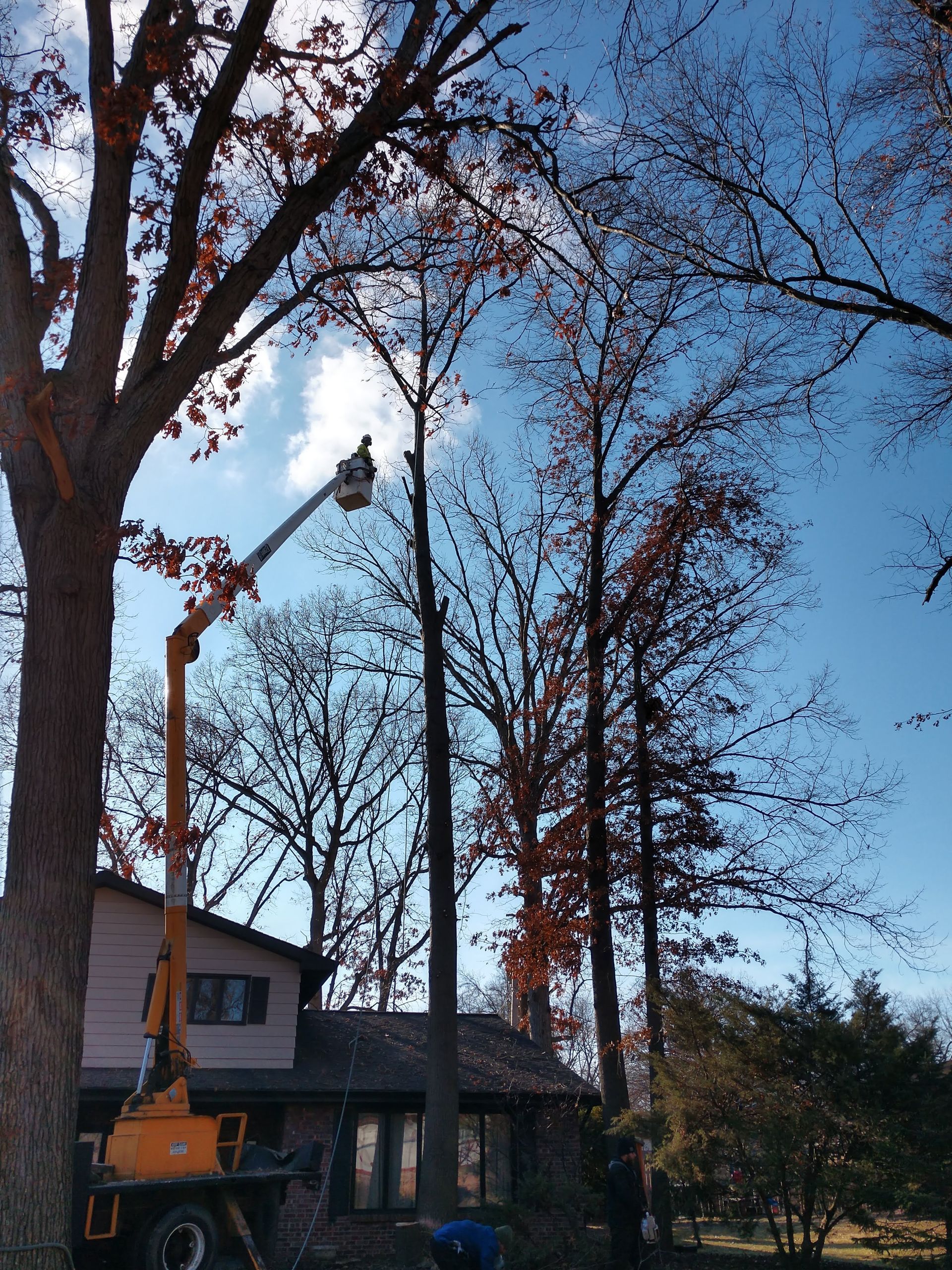
Trees Plus handles emergency storm removal throughout Lake and Porter Counties. We're equipped with a 94-foot crane and two bucket trucks, which are essential for safely removing trees from structures without causing additional damage during the extraction. Our crew is trained for the specific challenges of storm removal work, where trees are often under tension, tangled with other vegetation, and resting against structures in ways that require careful assessment before any cuts are made.
If you're in Portage , Valparaiso , or anywhere across our service area , call 219-508-0417 as soon as it's safe to do so. We prioritize emergency calls and respond as quickly as conditions allow.
Step Five: Address Remaining Hazard Trees Before the Next Storm
After any significant storm, it's worth walking your property and looking at every remaining large tree with fresh eyes. Storms that bring down one tree often stress others in ways that aren't immediately visible. Root systems shift, bark splits, and limbs crack partially without falling. Trees that seemed perfectly fine before the storm may be structurally compromised in ways that make them more likely to fail in the next high-wind event.
This is particularly important in lakeshore communities like Hobart , Ogden Dunes , and Chesterton , where storm systems can arrive in rapid succession and trees that survived the first event may not survive the second. Having a professional assessment after a significant storm event is one of the most practical things a homeowner can do to reduce risk going forward.
Trees Plus offers free post-storm assessments throughout our service area. Call 219-508-0417 or visit our contact page to schedule one. Identifying a hazard tree before it fails is always less expensive and less disruptive than dealing with the aftermath of one that doesn't.